Why Data Centers Take More Than They Give Back
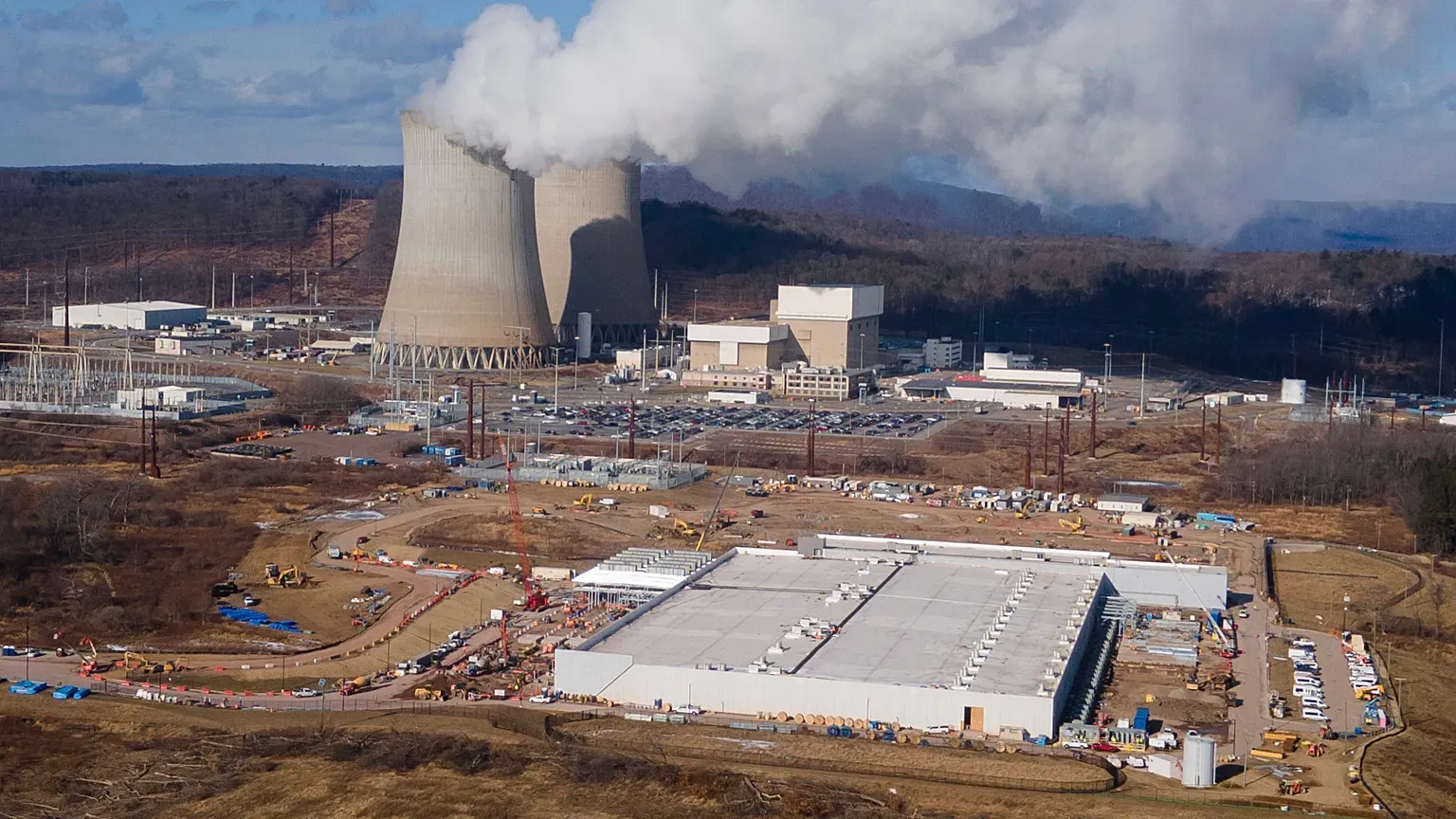
Here’s what we’ll learn in this article:
1. How much water does AI use?
2. How will data centers create fire hazards?
3. Why do data centers need so much power to operate?
4. What is the latest data center scheduled to come to Camp Verde?
5. What are the economic impacts of data centers?
6. Chandler votes down a data center
“Do not seek water, get thirst.”
~ Rumi
Water powers not only all biological processes on Earth, but has been used to evolve civilizations for thousands of years. The Greeks used water wheels to grind wheat into flour more than 2,000 years ago. Two hundred years earlier, the Egyptians used water screws for irrigation. The birth of the modern hydropower turbine began in the mid-1700s.1 Emerging technologies such as AI and quantum computing will continue to tap into the stream of this most treasured resource, requiring vast volumes of water to process and store information.2
Scientists are discovering today what the ancients have long known to be true: water contains memory3 , and can transmit biological information using our DNA as an antenna over long distances. Just as our DNA emit an electromagnetic pulse, so do our electronics. Water not only quenches our thirst, but makes thought possible, as our brains use up water to fire nerve impulses. The war for water can only be won once we know what we are fighting for. We may yet save this miracle molecule once we understand how it may save us. If water carries memory, it is high time now that we remember its power.
Arizona is a majestic place. The state likely gets its name from the O'odham phrase "ali ṣonak," meaning "place of the small spring.” However, our hope for a better tomorrow may not spring eternal if we are not careful. In a recent analysis4 of satellite data, Arizona State University researchers reported rapid and accelerating losses of groundwater in the basin’s underground aquifers between 2002 and 2024. Some 40 million people rely on water from these aquifers, which include parts of Arizona, California, Colorado, Nevada, New Mexico, Utah, and Wyoming. The basin lost about 28 million acre-feet of groundwater during the study period, an amount roughly equal to the storage capacity of Lake Mead. About 68 percent of the losses occurred in the lower part of the basin, which lies mostly in Arizona.

The Golden Goose of Water
If the aquifers of Arizona are the golden goose, then its egg is one of sustainable extraction. The nation’s unquenchable thirst for AI may soon make the well run dry. Entire water plants are being built to power data centers and AI factories. For instance, a 15-acre Industrial Reclamation Water Plant will support TSMC’s first two manufacturing facilities, and is expected to be operational in 2028. TSMC alone will use 16.4 million gallons of water daily. The mainstream media spins this story positively, stating that “due to the company’s water reuse and recycling efforts, the city will have to provide only about 4.2 million gallons.”9 What happens until 2028? Will residents even have enough water for themselves?
While promises of a brighter future sound wonderful, all of this building carries a tremendous cost, paid for by the people. For instance, a medium-sized data center uses the same amount of energy as around 300,000 households.7 An Amazon data center recently proposed and rejected5 by Tucson residents in April would have comprised a total of 10 buildings totaling two million sq feet. The Tucson data center would have had to use drinking water for its cooling systems for at least the first two years of operation until it could switch to using treated wastewater.
Arizona is already facing a drought, with government restrictions on water use, and AI will only boil off more steam. Professor Shaolei Ren, at UC/Riverside’s Electrical & Computer Engineering Dept., calculated the amount of water that data centers use to cool servers. Ren and his colleagues estimate that a conversation of about 20-50 questions with the AI chatbot GPT-3 “drinks” a 16-ounce (500ml) bottle of water.6 While this may not seem like much, when the model is fielding billions of queries, this adds up. Think about that the next time you do a mindless search for something your brain could probably remember anyway. The other problem is that data centers use massive cooling towers to get rid of the excess heat produced by computer server farms.
Turning Up the Desert Heat
While these towers are being lauded for their carbon and energy savings, we should keep in mind that the only energy these systems save are for themselves. Since the dawn of “energy efficient” appliances brought on by the 1970s oil embargo, technologies such as solar and other AC to DC inverters have created distorted, higher frequencies known as dirty electricity, which can be lethal to humans and the planet. Solar power farms also threaten to cover up much of the desert landscape, and endanger critical species that thrive on photosynthesis to survive.
Data centers will have their energy consumption monitored by smart meters, which are known to catch fire due to the arcing caused by the remote monitoring technology within the meter.7 The electronic infrastructure to power data centers will also run on lithium ion batteries, which are a known fire risk. If a lithium-ion battery’s chemicals heat up and can’t cool down, the battery can catch fire, explode and release toxic, flammable gases such as fluoride. Because of the increase and severity of battery storage systems’ explosions and fires, The National Fire Protection Association is considering an update to its Battery Safety Code.8 Mini nuclear reactors are also being considered for many data centers, which carry a tremendous environmental risk.9 As a result, data factories could likely become a net polluter.
Why is so much power required to run data centers?
The cloud is not a vapor, but a material reality that is composed of many precious metals whose energy requirements are vast. The cloud now has a larger carbon footprint than the airline industry.10 Data centers use an enormous amount of electricity, which has meant a 257% increase in electricity prices11 for communities near data centers since 2020.
The amount of power needed to run a center is due to the massive array of computers and components running at all times. To meet the pledge to customers that their data and cloud services will be available anytime and anywhere, data centers are designed to be hyper-redundant: If one system fails, another is ready to take its place at a moment’s notice to prevent any service disruption. Data is the new oil. Our consumption increases demand, which not only raises the price of energy but the cost to our environment as well.
Cloud anthropologist Steven Gonzalez Monserrate researched server farms for five years, and describes data centers as a "Russian doll of redundancies”, full of power systems like diesel generators and backup servers ready to take over computational processes should others become unexpectedly unavailable. Gonzalez states that “in some cases, only 6 to 12 percent of energy consumed is devoted to active computational processes.12 The remainder is allocated to cooling and maintaining chains upon chains of redundant fail-safes to prevent costly downtime.”
Data Center coming to Camp Verde
Camp Verde is located 86 miles north of Phoenix, with convenient access to Sedona and the Grand Canyon. Its central location offers the charm of small-town living while remaining close to cultural, recreational, and commercial destinations. If you drive through Arizona and happen upon Camp Verde, you may feel transported to the plush green fields of New Hampshire, and forget for a a moment you are in the desert.
The Verde River runs through this vibrant community, and offers a lush river corridor within a Lower Sonoran Desert surrounding. River plains, desert hills, and mesas create a striking landscape framed by a distant mountain expanse, encompassed by a unique blend of tribal lands. A major component of the Colorado River Basin, the Verde River is a crucial flyway for migratory birds and home to nesting bald eagles, rare species of reptiles and amphibians, and many species of native fish.13 The extraordinary combination of natural beauty and central accessibility makes Camp Verde one of Arizona’s most desirable communities. Ground water is the sole source of potable water in the Town of Camp Verde.14 What will become of this pristine land once data centers replace cottonwoods as the landscape?
BluSky AI Inc., a leading innovator in AI infrastructure, announced in a Letter of Intent in July, that it plans to purchase approximately 15 acres of land in Camp Verde. This acquisition is expected to be finalized by the end of 2025, with groundbreaking targeted for mid-year 2026.15 The power demand of the data center site is expected to reach 3.75 MW (megawatts) to meet growing demand. This is equivalent to 3,750 kilowatts (kW), which can power approximately 3,000 homes.
Economic impacts
The number one goal of city and state policymakers is to grow tax revenues. The most common driver of tax revenue growth is job creation. Thus, most elected leaders and taxpayers often wonder why incentives are offered to companies building data centers. The typical corporate headquarters or manufacturing facility can have between 200 and 1,000 jobs on site. By comparison, the number of jobs at a typical data center can be anywhere between 5 and 30.
According to AZ Business Magazine, data centers in Arizona supported more than 2,500 jobs in construction and operations in 2020. However, a single data center creates relatively few permanent jobs, with typically 20 to 150 direct staff (technicians, security, managers) for a large facility. Data centers can generate up to thousands of temporary construction jobs. While construction provides short-term economic boosts, ongoing operations rely heavily on automation, with few on-site roles compared to the massive investment.
A recurring question arises: “Why give incentives to a data center that employs only 30 people when a state could be investing in a 500-job headquarters?”
The answer: capital investment - another driver of tax revenue growth. While low on employment, data centers are highly capital-intensive. Capital investment in a data center could be $50 million on the low end and up to $1 billion on the high end depending on the type of facility. This investment comes in the form of construction materials, electronics containing precious metals, and ultimately consumption of electricity.
Here is a general breakdown of how a state creates revenue from a data center’s capital investment:
-
Sales taxes on construction materials
-
Sales taxes on equipment purchases
-
Sales taxes or franchise fees on power consumption
-
Personal income taxes from construction and permanent jobs
-
Unemployment taxes from construction and permanent jobs
Commercial Real Estate Services Group CBRE conducted a study16 on what a $1 billion data would translate into in terms of tax revenue for a state. Based on a typical state’s tax structure as well as demographic characteristics, a $1 billion data center could generate upward of $200 million in total tax revenues over a 10-year period of time, including the one-time construction phase and ongoing operations. This $200 million fiscal impact is equivalent to a corporate headquarters creating 1,700 jobs with a $130,000 average salary and making a $40 million capital investment.17

One should remember that the whole premise of AI is not job creation, but workforce assimilation. If AI wound up creating more jobs for all of us, then AI would find itself out of a job. Artificial intelligence was the top reason for US job cuts in October, accounting for a fifth of all staffing reductions.18 It stands to reason that an AI data center promising 100 jobs is an enticing prospect for a rural town on the ropes. As a matter of fact, data centers are typically built in rural areas and more economically disadvantaged communities.19 In reality, claims about job creation and economic development made by data center builders are frequently overstated.20
A tug of data war
Recently, residents of Chandler Arizona (a suburb of Phoenix) voted down a proposal that would have allowed an AI data center to be built on a 40-acre property.21 On December 11, Chandler's City Council unanimously voted down a controversial $2 billion artificial intelligence data center proposal. The fact that Sedona and Flagstaff also recently refused Flock AI cameras show that many residents do not want more technology infringing on their daily lives. Even though the local trend indicates Arizonians are against more data infrastructure, the national trend towards “AI dominance” will seek to supersede municipal concerns.
In December, The White House issued an Executive Order “Ensuring a National Policy Framework for Artificial Intelligence.” This means that the Executive Branch wants to assert federal supremacy over artificial intelligence policy - directing agencies to challenge state laws and replace local standards with a single national framework, effectively sidelining local governments from decisions that will shape the next generation of technology. The Order also directs the Attorney General to establish an AI Litigation Task Force whose sole responsibility shall be to challenge State AI laws inconsistent with the newly-proposed federal policy.
It seems as if our world stands at a crossroads. One road leads to the memory of our past, and a new remembrance of what wealth can mean, not only financially, but ecologically. The other road tempts us further down a path where we pay more for a bandwidth that gives us bits of data, but strips away the vital technology of water that flows through us and to us.
German mystic and scholar Rudolf Steiner famously said “man will continue to invent technologies outside of himself until he either destroys the world or realizes everything he’s created is an inferior copy of what’s inside of him.”
The question is which will come first?
Power ON with light
Power OFF at night
Roman & Bohdanna
WANT TO REDUCE EMF IN YOUR LIFE?
Improve sleep, increase focus, and boost metabolism...
Don't live zapped. Live with zest!