“Science knows the qualities of electricity, but not its real essence.”
~ Mahmoud Mohammed Taha
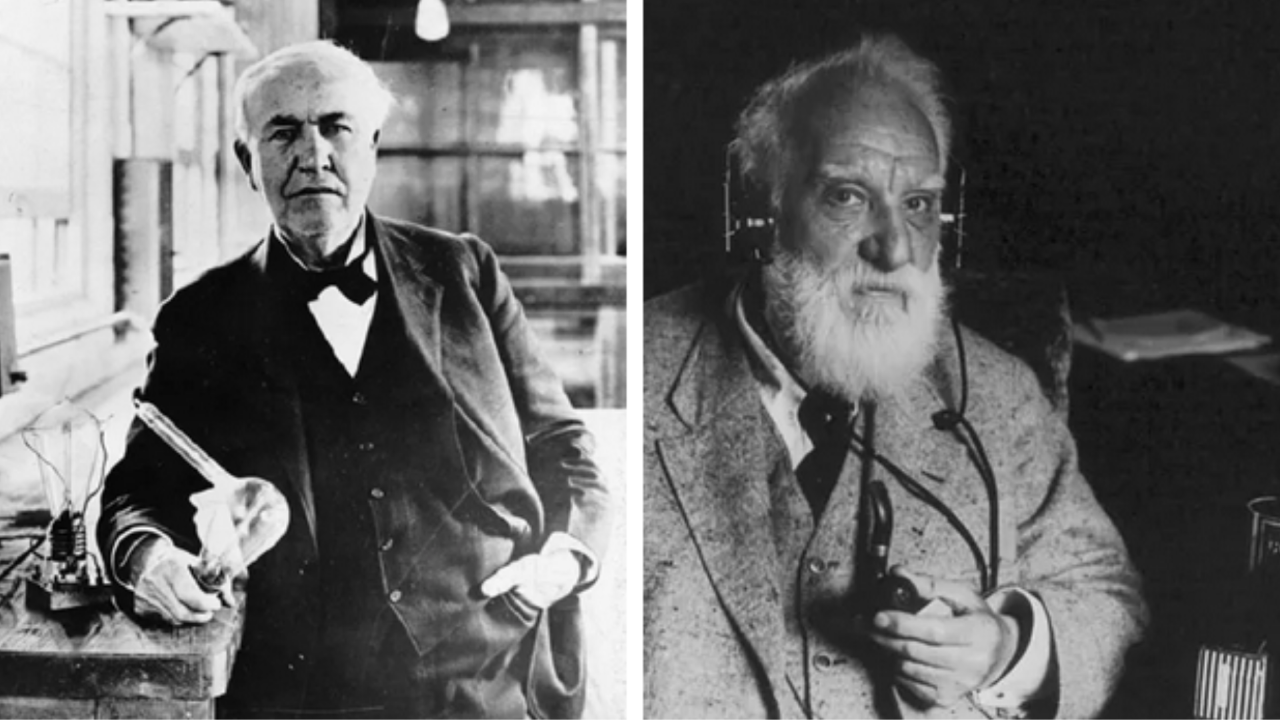
What do Thomas Edison and Alexander Graham Bell have in common?
They were both diagnosed with diabetes after conducting electrical experiments.
John Rollo, a Scottish military surgeon, wrote the first book on diabetes in 1798 and had only seen three cases himself in the twenty-three years he practiced medicine.
In 1876, the distinguished British physician Benjamin Richardson noted diabetes to be “a modern disease caused by exhaustion from mental overwork or by some shock to the nervous system. Yet it was still uncommon.”
How did diabetes come to be one of society’s greatest killers?
Let’s play a shell game
There are three types of diabetes:
Type 1️⃣: Genetic - occurs mostly in children, accounts for 5% of cases
Type 2️⃣: Epigenetic - due to lifestyle, adult-onset, accounts for 90-95% of cases
Type 3️⃣: Environmental triggers like EMF cause blood sugar to spike.
In this article, we’ll focus on what’s behind door #3.
Sugar is only one of the culprits behind diabetes and fails to explain why this illness is becoming increasingly prevalent. Why did rates of diabetes skyrocket tenfold, even after sugar consumption did not rise at all between 1922-1984?
Let’s examine two ethic groups, which have followed ancestral diets for thousands of years, only to have a massive shift in their metabolic health.
The American Indian
American Indians have been called “genetically predisposed” to diabetes. Most believe that this inclination toward diabetes is triggered by a sedentary lifestyle of living on the reservation, compounded by the fact that they eat fry bread made with white flour and sugar. Indians had been eating fry bread as a staple since the 1800s, and diabetes did not exist among them until 1950. What changed?
In 1950, the first electric service came to Standing Rock in the Dakotas, along with others including the Gila River Reservation, whose inhabitants were revealed in a study conducted by the US Indian Health Service to have 380 cases of diabetes per 1000.
The Gila River Power Plant is over one-half mile in length and was hailed as one of the largest in the world.
The Bhutanese
Bhutan, an isolated community in the Himalayas that abides by its traditional culture and ancestral foods to this day, serves as another salient example. Bhutan had some of the healthiest people in the world, with little disease.
There was no electrification in most of the country, until 2002, when the Bhutan Power Corporation was launched. In 2004, 634 new cases of diabetes were reported in Bhutan. In 2007, there were 2,541 cases with 15 deaths.
The rise in mortality and illness was even blamed on the Bhutanese diet, one that they had followed for thousands of years.
Why is obesity now a symptom of diabetes?
Before the 1900s, diabetics were also not overweight. Today, many are obese due to their cells’ reduced ability to metabolize fats as well as glucose.12 Impairment of fat metabolism is a sign that the engines of the cell, our mitochondria, aren’t working efficiently. How then, do artificial frequencies degrade our metabolism?
EMFs reduce the ability of our mitochondria to use free electrons, which ultimately power the basis of our metabolism - the electron transport chain (ETC). Our ETC operates within our mitochondria, and requires critical enzymes like cytochrome C oxidase in order to efficiently generate energy for our bodies.
We can think of this chain as a train, or a locomotive that uses infrared and full spectrum sunlight as its “coal” to create energy. Sunlight is a natural form of electromagnetic radiation, to which we’ve been adapted for our entire existence. Like plants, humans use sunlight to create energy. The end-product of our ETC is the energy molecule known as adenosine triphosphate (ATP).
📳 What happens when we introduce electrosmog?
Dampened by the smog of artificial, invisible light, the fire of our metabolic locomotive dies out from too much electric rain. Now our mitochondria are stuck in the middle of the woods with no flashlight. Since we’re only using the light of our iPhones to guide us back into a labyrinth of false health solutions and fallen gurus like Peter Attia who tell us airpods aren’t a problem, our metabolism can’t find its way back home.
Ultimately we arrive at our final destination - metabolic disorder.
How does radiation effect our blood sugar?
During the Cold War, the Joint Publications Research Service translated foreign documents of Soviet research, which showed how participants exposed to electromagnetic fields, similar to those of the cordless phones and cell phones we have today, were prediabetic and had sugar in their urine after the experiments. In 2010, Harvard, along with the University of Massachusetts and Joslin Diabetes Center, published a review of the role of mitochondria in diabetes, and concluded that there was a “failure of mitochondria to adapt to higher cellular demands.”
In 2011, Finnish researchers conducted brain scans and submitted their findings to the Journal of Cerebral Blood Flow and Metabolism, showing that glucose metabolism is disrupted in the region of the brain next to a cell phone.
When mitochondria do not get the appropriate energy input (sunlight), the demand on their energy output (production) is higher. In a way, it’s not that the obese have too much energy (stored fat), but too little, as they aren’t able to efficiently create energy via the ETC.
📈 Another mysterious spike
In 1997, diabetes cases soared 31% in one year. This is the same year that cell phones were no longer a luxury and became a commonplace necessity.
Source: US Diabetes Surveillance System
Before 1997, rural areas of the US did not have cell towers.
In a 2008 study published in the Journal of Electromagnetic Biology and Medicine, Dr. Magda Havas examined four different individuals, each with varying types of diabetes. This study presents a paradigm shift in the way we think about diabetes.
In addition to Type 1 diabetics, who produce insufficient insulin, and Type 2 diabetics, who are unable to effectively use the insulin they produce, a third type of diabetes is introduced known as Type 3. This form may be environmentally exacerbated or induced by EMF exposure. When the study participants are able to reduce their EMF, their blood sugar levels drop.
Here is a snapshot of the four participants:
A 54-year old male diagnosed as pre-diabetic: his blood sugar remains normal when fishing, but when near powerlines or working in front of his computer, his blood sugar increases.
A 57-year old female with Type 2 diabetes: when she goes for a twenty-minute walk outside, her blood sugar drops considerably. When she walks on her treadmill (which emits dirty electricity) her blood sugar rises considerably.
An 80-year old female with Type 1 diabetes: her blood sugar dropped by 33% and the insulin dose she required dropped by 75% after installing filters that reduce dirty electricity.
A 12-year old male with elevated blood sugar was rushed to a hospital, and had elevated blood sugar while admitted, but once he went home and was able to reduce EMF in his environment, blood sugar decreased considerably.
More details of the study can be found in the following video:
Did you know that diabetics often have low Vitamin D levels?
A healthy kidney is loaded with vitamin D receptors, which convert D to calcitriol, which then helps our bodies regulate calcium levels.
Why aren’t doctors prescribing sunlight, rather than dialysis, for diabetics?
You may also notice that many diabetics have teeth that are more yellow than translucent white. Dentin is a layer of material that lies immediately underneath the enamel of our tooth, and is loaded with calcium. Neurosurgeons like Dr. Jack Kruse surmise that diabetics have defects in POMC (proopiomelanocortin) in their dentin4 and other tissues, causing this yellow color.
How do we ensure we have optimal amounts of POMC?
By exposing ourselves to full spectrum UV!
POMC also helps us makemelanocyte-stimulating hormone (MSH). Both hormones help us control appetite by balancing our levels of leptin. POMC needs sunlight and the right amount of thyroid stimulating hormone (TSH) to work efficiently. Ultimately, POMC helps us maintain blood sugar levels, protects the body from stress, and suppresses inflammation:
Credit: Alexander Wunsch, MD
Much of what is known about our brain’s control of overall energy balance and fat storage stem from what we know about leptin (the light hormone).
In the course of chronic kidney disease, alterations in vitamin D metabolism contribute to increases in the levels of parathyroid hormone. Why is this a problem?
Hyperparathyroidism can create too much calcium in our bodies, leading to a host of chronic diseases - including brain fog and fatigue. This is why it’s important to not have the skin on our neck exposed to artificial frequencies of visible and invisible light, as our neck is loaded with photoreceptors:
Our parathyroid gland
If you’ve followed the work of Dr. Martin Pall, you’ll know that wireless radiation can effect how our bodies process and use calcium. An Eastern perspective of how EMFs impact us maintains that it’s not calcium, but our very life force, our élan vital, that is affected. According to traditional Chinese medicine, our kidneys are the source of qi,or vital life force energy. It seems that both east and west can agree that we don’t need EMF giving us cheap shots to our kidneys.
Don’t let EMF see the whites of your eyes
In many diabetics, their macula (part of the retina at the back of the eye) also loses its yellow pigment. Yellow pigments come from carotenoids like lutein and zeaxanthin (found in eggs and shrimp).
These pigments are yellow to preserve the sharp central vision of the macula and absorb any stray blue light as a complementary color. Blue light causes visual blur when your macula is damaged. Blur occurs because blue light bends more than other wavelengths of color.
Many diabetics have this blur before they get diagnosed.
credit: Alexander Wunsch, MD
Diabetics also tend to show an altered pupillary response to blue LEDs. This would make sense if their melanopsin (blue-light detectors) are ruined by massive exposure to blue light - the #1 toxin of our time. Blue light also destroys the blood vessels in this middle region of the retina.
Here are more pathways by which blue light creates metabolic disorder:
Furthermore, a 2022 study in the Journal of the Endocrine Society showed that a disrupted circadian rhythm can increase the risk of young-onset Type 2 diabetes in 14 year old boys. What are most teen boys exposed to at night, which also changes our normal circadian rhythm?
Blue light. Get out of its way, or you’ll be playing solitaire with Wilford Brimley.
This is why I make sure to wear computer glasses, and use red light screen filtration like Iris.
Upgrade your metabolism with UV
Many hypothyroid (thyroid with low activity) diabetic patients have difficulty tanning because their skin is atrophic (pale with lesions) due to a lack of melanocyte-stimulating hormone (MSH).
We make MSH by exposing ourselves to UV light. Judging by the amount of people sheltering indoors with their iPads, and avoiding the Sun, we can expect diabetes to soar, especially in younger populations.
Why else is UV good for a diabetic?
Regular exposure to solar UV light via our eyes and skin stimulates our thyroid and brain to make the T3 thyroid hormone. T3 balances our body’s metabolism. Tanning in full spectrum sunlight also increases our metabolism, which in turn helps us maintain a healthier weight.
Wild Fat Rats Can’t Stop Eating Sugar too?
If humans are becoming diabetic and obese in response to the planet being saturated with artificial junk light, what’s happening to our furry friends? What could be a better control group in an experiment, than animals who aren’t subject to their own placebo effect?
David B. Allison, Professor of Biostatistics at the University of Alabama School of Public Health, analyzed over 20,000 animals from twenty-four populations, and found that the average weight of the animals rose over time.
Chimps gained the most and were twenty-nine times more obese in 2005 compared to 1985. Even country rats were 15% more obese each decade, over a period of 40 years.
Wild and domestic animals had both been gaining weight since at least the 1940s. What changed?
After World War II, there was an exponential increase in not only streetlight in rural areas, but an explosion in radar technology, unleashing foreign frequencies upon the earth for the first time in its existence.
As barons of the Industrial Age forged new avenues of light, humanity became emboldened, carving out dark alleys where not even rats could hide from the torrential downpour of electric rain. Today we nibble away at the crumb of electronic concrete before us, seeking a way out of a prison ship, which rat and man alike cannot abandon.
WANT TO REDUCE EMF IN YOUR LIFE?
Improve sleep, increase focus, and boost metabolism...